


close
Choose Your Site
Global
Social Media
Views: 0 Author: Site Editor Publish Time: 2025-09-15 Origin: Site


Stainless steel fittings are essential in many industries due to their durability and resistance to corrosion. But when it comes to choosing the right material, how do you decide between 304 and 316 stainless steel? In this article, we will compare these two materials, covering their differences in composition, resistance, cost, and applications. By the end, you’ll have a clearer understanding of which stainless steel pipe fitting is best for your needs.
Before diving into the differences, it’s important to understand what stainless steel fittings are. These fittings are crucial components used to connect pipes in a system, often in water, gas, and chemical pipelines. Stainless steel fittings are particularly valued for their durability and resistance to rust and corrosion, making them ideal for a variety of environments.
Both 304 and 316 are part of the Austenitic Stainless Steel family, which is renowned for its excellent corrosion resistance and formability. The primary distinction between these two grades lies in their composition, which affects their performance and cost.
The chemical composition of stainless steel determines its properties, including strength, corrosion resistance, and cost. The difference between 304 and 316 stainless steel mainly comes down to one key element: molybdenum.
● 304 Stainless Steel: Composed of 18-20% chromium, 8-12% nickel, and small amounts of other elements such as manganese and carbon. This composition provides excellent resistance to corrosion and oxidation in mild conditions.
● 316 Stainless Steel: This alloy has a similar base composition but includes 2-3% molybdenum, along with 16-18% chromium and 10-14% nickel. Molybdenum enhances corrosion resistance, especially in chloride-rich environments, making 316 stainless steel ideal for harsh conditions.
The additional molybdenum in 316 stainless steel offers substantial advantages when it comes to preventing corrosion, particularly in marine environments and industries exposed to aggressive chemicals.
Tip: If your system will be exposed to saltwater or aggressive chemicals, 316 stainless steel pipe fittings are the better choice for long-term durability.
The main difference between 304 and 316 stainless steel is the chemical elements added to the alloy:
● 304 Stainless Steel: With 18-20% chromium and 8-12% nickel, this alloy offers robust corrosion resistance, especially in dry, indoor, or mild environments. However, it lacks the additional corrosion-resistant properties found in 316, particularly in highly corrosive environments like marine settings or chemical plants.
● 316 Stainless Steel: In addition to chromium and nickel, 316 contains 2-3% molybdenum, which significantly improves its resistance to pitting and crevice corrosion. This makes it an excellent choice for environments exposed to chlorides, acids, and saltwater.
Although 304 stainless steel offers excellent resistance in most non-corrosive environments, 316's added resistance makes it suitable for more challenging applications.
Note: While 316 is more expensive due to its added molybdenum content, its resistance to corrosion in harsh environments often makes it the more cost-effective option in the long run.
The presence of molybdenum in 316 stainless steel makes it significantly more resistant to certain types of corrosion, including chloride-induced pitting corrosion and crevice corrosion. This enhanced resistance makes 316 stainless steel the go-to choice for:
● Marine environments: Exposure to saltwater accelerates corrosion in metals. 316 stainless steel's ability to resist saltwater corrosion makes it ideal for boat fittings, offshore rigs, and coastal infrastructure.
● Chemical plants and pharmaceutical industries: 316’s resistance to aggressive chemicals ensures that pipe systems and fittings can withstand exposure to acids, alkalis, and other hazardous materials without deteriorating.
Tip: If you are working on projects in marine or coastal areas, or in chemical industries, consider using 316 stainless steel pipe fittings for superior protection against corrosion.
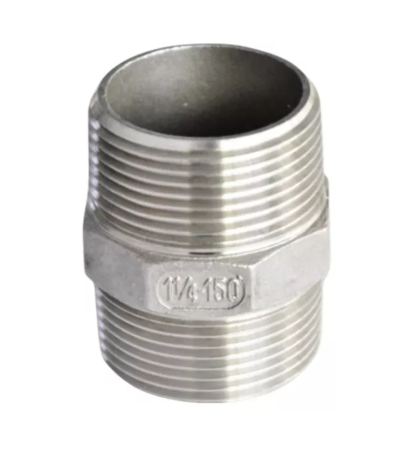
While both 304 and 316 stainless steel offer excellent corrosion resistance, the cost difference can be a deciding factor in your material selection. 316 stainless steel is generally more expensive than 304, primarily due to the additional molybdenum content.
● 304 Stainless Steel: Since it is less expensive, 304 stainless steel is often the preferred option for residential and commercial applications where corrosion resistance is important but not critical. It performs well in dry and moderately corrosive environments, such as water systems, food processing, and kitchen appliances.
● 316 Stainless Steel: The added molybdenum makes 316 stainless steel pricier, but its superior corrosion resistance is worth the investment when the system is exposed to more demanding environments. This makes it ideal for marine applications, chemical processing, and pharmaceutical equipment.
Tip: If you need to balance budget constraints with performance, 304 stainless steel can be a cost-effective choice for general plumbing and food-related applications. For more aggressive environments, the additional cost of 316 stainless steel is justified.
The durability of stainless steel fittings is highly influenced by the environment in which they are used. Here’s how each material performs in different conditions:
● 304 Stainless Steel Fittings: These fittings are well-suited for residential plumbing, water distribution systems, and food processing equipment, where exposure to harsh chemicals and saltwater is minimal. They offer good durability in indoor environments and non-corrosive conditions.
● 316 Stainless Steel Fittings: Due to its superior corrosion resistance, 316 stainless steel excels in marine environments, chemical plants, and pharmaceutical industries, where corrosive agents such as chlorides or acids are present. Its ability to resist pitting and stress corrosion cracking makes it ideal for use in harsh conditions.
Note: If your system will be exposed to high-flow rates, temperature extremes, or aggressive chemicals, 316 stainless steel pipe fittings are the more durable option, ensuring longevity and minimizing downtime due to maintenance.
304 stainless steel is widely used in applications where corrosion resistance is necessary, but exposure to extreme chemicals or saltwater is not a concern. Common uses include:
● Residential plumbing: Ideal for drinking water systems, hot water piping, and kitchen sinks.
● Food processing equipment: Commonly found in kitchen appliances, dishwashers, and refrigerators due to its non-reactivity with food and water.
● General industrial use: Used for HVAC systems, air conditioning units, and chemical equipment in less corrosive settings.
304 stainless steel offers a good balance of performance and cost, making it ideal for applications where extreme environmental conditions are not a factor.
316 stainless steel’s superior corrosion resistance makes it the best choice for highly demanding applications. It is frequently used in:
● Marine environments: Due to its resistance to saltwater corrosion, 316 stainless steel is the preferred choice for boat fittings, offshore platforms, and coastal piping systems.
● Chemical and pharmaceutical industries: Ideal for chemical processing plants, food production facilities, and pharmaceutical equipment where exposure to aggressive chemicals is common.
● Municipal water treatment: 316 stainless steel is commonly used in potable water systems, water treatment plants, and sewage treatment plants because it resists corrosion from chlorine and other chemicals.
Tip: If your application involves exposure to chemicals, seawater, or high-chloride environments, using 316 stainless steel pipe fittings will offer superior longevity and reduce maintenance needs over time.
In addition to the grade of stainless steel, the pattern of the fitting (light or heavy) plays a significant role in its performance. The key difference between light and heavy pattern fittings is the wall thickness and weight of the fitting:
● Light Pattern Fittings: These fittings have thinner walls and are lighter in weight. They are designed for applications where high pressure or extreme conditions are not a concern. Light pattern fittings are typically used in residential plumbing systems or low-pressure systems.
● Heavy Pattern Fittings: These fittings feature thicker walls and are heavier, making them more durable under high-pressure conditions. They are ideal for industrial systems, chemical plants, and applications that involve high flow rates or extreme temperature conditions.
Tip: Choose light pattern fittings for general plumbing or residential systems, and opt for heavy pattern fittings when durability and strength are required, such as in chemical processing or steam systems.
Selecting the right pattern for your stainless steel pipe fittings depends on the demands of your application:
● Light Pattern Fittings: Suitable for residential plumbing, non-critical industrial applications, and commercial water systems where pressure and stress are not significant concerns.
● Heavy Pattern Fittings: Necessary for high-stress environments such as industrial facilities, chemical plants, and systems exposed to high pressure or corrosive materials.
Note: If you are unsure which pattern to choose, assess the pressure, flow rates, and environmental conditions your system will face. Heavy pattern fittings may increase upfront costs but provide better long-term performance in industrial and high-stress applications.
For applications in saltwater, coastal infrastructure, and boat fittings, 316 stainless steel’s resistance to saltwater corrosion makes it the preferred choice. It can withstand constant exposure to chlorides, preventing rust and pitting.
316 stainless steel’s enhanced resistance to aggressive chemicals makes it ideal for chemical processing and pharmaceutical industries. It prevents degradation when exposed to acids, bases, and solvents, ensuring a longer service life for equipment and pipelines.
In industrial environments exposed to various corrosive materials, both 304 and 316 stainless steel are used. However, 316 stainless steel outperforms 304 when exposed to high concentrations of chemicals, high temperatures, or pressure conditions.
Choosing between 304 and 316 stainless steel pipe fittings depends on the environmental conditions your system will face. 304 stainless steel is suitable for general applications, offering cost-effectiveness and moderate corrosion resistance. It is commonly used in residential plumbing and food processing. On the other hand, 316 stainless steel provides superior corrosion resistance, making it ideal for harsh environments such as saltwater, chemicals, and extreme temperatures. It is perfect for marine, chemical, and pharmaceutical industries. Maitolead Pipeline Technology (Tianjin) Co., Ltd offers high-quality stainless steel fittings tailored to meet diverse needs, providing durable and reliable solutions for various industries.
A: The key difference is corrosion resistance. 316 stainless steel pipe fittings offer superior protection in harsh environments like saltwater and chemicals, while 304 is sufficient for less demanding applications.
A: Choose 304 stainless steel pipe fittings for general applications with moderate corrosion exposure, such as residential plumbing and food processing.
A: Yes, if your system operates in highly corrosive environments like marine or chemical settings, 316 fittings provide long-lasting protection and performance.
A: No, 304 stainless steel fittings are not recommended for marine environments due to their lower corrosion resistance compared to 316 stainless steel.
A: 316 stainless steel contains molybdenum, which improves its resistance to corrosion, especially against chloride, while 304 does not have this feature.
A: 304 stainless steel fittings are ideal for food processing due to their corrosion resistance and ease of cleaning, making them safe for food contact.


