close
Choose Your Site
Global
Social Media
Views: 0 Author: Site Editor Publish Time: 2026-02-06 Origin: Site


Did you know that choosing the wrong part for your piping system can lead to dangerous leaks and expensive repairs? Every piece of metal matters when it comes to keeping a pipeline safe and efficient. That is why selecting the right flange is one of the most critical decisions an engineer or buyer can make.
In the industrial world, Slip-On flanges and Blind flanges are two of the most popular choices you will see on a supply list. However, people often confuse them or wonder which one is better, even though they serve completely different purposes. While one is designed to connect pipes together to keep fluid moving, the other is built to stop the flow entirely.
Think of Slip-On flanges as the "connectors" and Blind flanges as the "terminators" of your piping system. In this post, we will break down the technical differences, installation rules, and specific best uses for Blind vs. Slip-On Flanges so you can make the perfect choice for your project.
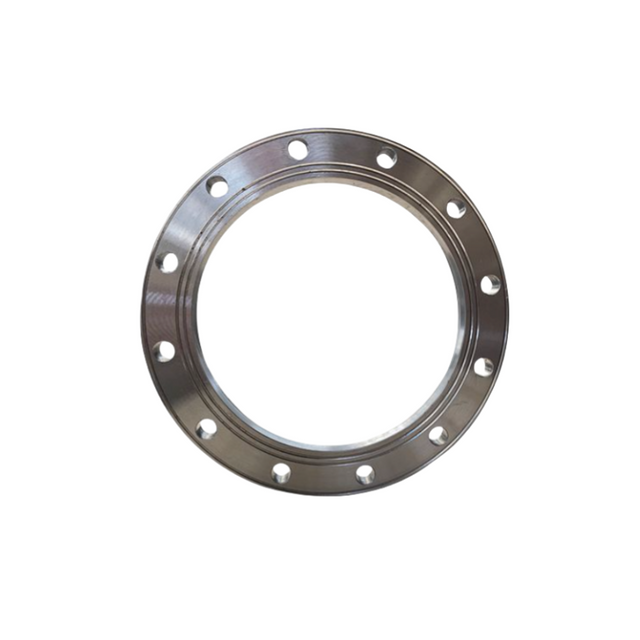
If you want to understand how pipes connect, start with the name. A Slip-On flange does exactly what it says: it slips right over the end of a pipe. Think of it like sliding a ring onto your finger. It is essentially a ring placed over the pipe end to create a connection point.
The design is simple but effective. We manufacture these flanges with a hole slightly larger than the Outside Diameter (OD) of the pipe. This allows the flange to slide freely along the pipe length until it reaches the right spot.
You will typically see two main variations in the industry:
Slip-On Plate Flange: This is a simple flat ring. It is the most basic version.
Slip-On Hub Flange: This version has a small "neck" or hub. It costs a bit more, but it provides better reinforcement and joint quality.
This is where things get technical. You cannot just slide it on and walk away. To make the connection permanent and leak-proof, we use welding.
Installation requires two fillet welds:
One weld on the outside (at the hub or back of the flange).
One weld on the inside (at the end of the pipe).
Why do we do this? The double weld secures the flange and seals it tight against pressure.
There is a big advantage here regarding alignment. Because the pipe slides inside the flange, we have some "wiggle room." It is much easier to line up a Slip-On flange than a Weld-Neck flange, where you must match metal to metal perfectly.
Deciding to use this flange often comes down to budget and time. Here is the trade-off:
The Good (Pros): The material cost is low. It is one of the cheapest flanges you can buy off the shelf. Plus, it is forgiving if your pipe length is not perfect.
The Bad (Cons): Installation labor is higher. Because welders must perform two separate welds (inside and out), it takes longer to install than other types.
While the Slip-On flange acts as a bridge, the Blind flange acts as a wall. By definition, it is a solid steel disk. It has mounting holes around the perimeter, but unlike other flanges, it has no central hole (bore). It is completely solid.
We use this flange effectively to "blind" or terminate a pipeline. Think of it like the cap on a bottle. It seals the end of a pipe system, blocks a nozzle opening, or stops flow to a specific section.
This isolation is critical. It allows maintenance teams to work on one part of a line without shutting down the entire facility. If we need to expand the pipeline later, we can simply unbolt the blind flange and attach new piping.
Because it blocks the fluid entirely, the Blind flange faces a unique physical challenge. The internal pressure of the liquid or gas pushes directly against the flat face of the disk.
This force creates significant bending stress at the center of the plate. It differs from other flanges, which mostly handle tension. Engineers must calculate the thickness carefully to ensure the center does not bulge or fail under this intense pressure.
Installation here is quite different from the Slip-On method. We rarely weld a Blind flange. Instead, we use a bolted connection.
You attach it to the face of another flange (like a Weld Neck or Slip-On) using bolts and a gasket. This makes the connection semi-permanent. You can tighten it down for a secure seal, but you can also remove it easily when necessary.
Using a Blind flange offers distinct advantages and challenges compared to welded alternatives:
Pro (Accessibility): It is removable. This allows easy access to the interior of the line for cleaning, inspection, or removing debris ("rodding out").
Con (Stress Load): It must handle high stress. Because the pressure concentrates at the center of the plate, these flanges are often heavier and thicker than slip-ons of the same pipe size to prevent failure.
Now we get to the heart of the matter. If you are trying to choose between these two, you need to understand how they behave in the field. They might look similar on a spec sheet, but they perform opposite jobs.
To help you decide quickly, we broke down the three biggest differences below.
The easiest way to remember the difference is to look at the flow.
Slip-On Flanges (The "Go"): These facilitate flow. We use them to join two pieces of pipe together or connect a pipe to a nozzle. They extend the pipeline so fluid can keep moving.
Blind Flanges (The "Stop"): These stop flow completely. They act like a dead end. We install them to terminate a line or close off a vessel opening. Nothing gets past a blind flange.
How we attach them to the system changes everything regarding maintenance.
Slip-On Flanges are permanent.
Once you install a Slip-On, it stays there. You slide it over the pipe and secure it with two fillet welds (one inside, one outside). You cannot simply unscrew it later. To remove it, you have to cut the pipe.
Blind Flanges are semi-permanent.
We do not weld these. Instead, we bolt them to the face of another flange using a gasket in between. This makes them removable. If you need to open the line for inspection or add a new pipe section later, you just unbolt the Blind flange. It gives you flexibility.
Both types follow ASME B16.5 standards, but engineers view their strength differently.
Slip-On Constraints:
Because they rely on fillet welds, we generally use Slip-Ons for lower to medium pressure applications. They are not as strong as "Weld Neck" flanges, which use a full penetration butt weld. Under extreme cyclic pressure (pressure going up and down), the fillet welds can eventually fail.
Blind Flange Strength:
These are heavy hitters. We can engineer Blind flanges for very high-pressure isolation, ranging from Class 150 all the way up to Class 2500. However, remember the stress concentrates right in the center of the disk. It must be thick enough to handle that force without bowing.
| Feature | Slip-On Flange | Blind Flange |
|---|---|---|
| Primary Job | Connects pipes (Extends flow) | Seals pipes (Stops flow) |
| Connection Type | Welded (Permanent) | Bolted (Removable) |
| Weld Requirement | Double Fillet Weld | None (Usually) |
| Typical Pressure Use | Low to Medium | Low to Very High |
You cannot just pick any flange off the shelf. To ensure safety and compatibility, we rely on specific industry standards. These rules tell us exactly how thick, wide, and heavy a flange must be.
For most industrial projects, ASME B16.5 is the standard rule book. It covers standard pipe sizes from NPS ½” all the way up to 24″. If you work with massive pipelines—anything from 26″ up to 60″—you will switch to ASME B16.47 (Large Diameter Flanges).
The environment determines the material. If the flange cannot handle the fluid inside or the weather outside, it will fail. We typically choose from three main categories:
Carbon Steel: This is the workhorse of the industry. We use it for general water, oil, and gas lines where corrosion is not a major threat.
Stainless Steel: When rust is a risk, we choose stainless. It is perfect for corrosive environments, chemical processing, or food production.
Alloy Steels: These are for extreme conditions. If your system faces incredibly high heat or pressure, alloy steel provides the extra strength needed.
The "face" is the surface area where the gasket sits. It plays a huge role in preventing leaks. Choosing the wrong face type is a common mistake.
This is the most common type. As the name suggests, the sealing surface sits slightly higher than the bolting circle area. Why do we do this? It concentrates the pressure on a smaller surface area. This allows the gasket to bite in harder and create a stronger seal.
Here, the entire flange surface is flat. We typically use Flat Face flanges when connecting to cast iron equipment or valves. Cast iron is brittle. If you try to bolt a Raised Face flange against flat cast iron, the bending force might crack the equipment. A Flat Face spreads the load evenly to prevent damage.
Working with industrial piping is serious business. A small mistake during installation or maintenance can lead to big problems. Whether you use Slip-On or Blind flanges, safety always comes first. We need to follow specific rules to keep everyone safe.
Because Blind flanges block the flow completely, they face tremendous force. We must handle them with care.
Choosing the right gasket is critical. You might think a bigger gasket is better, but that is wrong here. Never use a solid ID gasket that covers the center of the blind flange.
If you put a gasket material across the center, the internal pressure pushes against it. This can cause the gasket to blow out or leak. Instead, we use a Ring Gasket. It sits only on the sealing face (the rim). This ensures the seal holds tight under pressure.
Treat a Blind flange like a loaded spring. Before you ever loosen a bolt, you must check the pressure. Always depressurize the line completely. If you loosen a Blind flange while there is still pressure inside, the fluid or gas can spray out violently. It can injure workers. We always double-check gauges before grabbing a wrench.
Slip-On flanges rely entirely on welding. If the weld fails, the pipe fails. We cannot bolt these on; we have to fuse them to the pipe.
The strength of this connection depends 100% on the quality of the fillet welds. Remember, we need two of them: one on the inside and one on the outside. If a welder skips the inner weld, the joint becomes weak. It might fail under vibration or stress.
We need to verify those welds are good. However, we cannot easily use X-rays on fillet welds like we do on butt welds. Instead, we use other Non-Destructive Testing (NDT) methods to find surface cracks:
Dye Penetrant Testing (PT): We spray a special dye on the weld. It seeps into tiny cracks. Then we wipe it off and use a developer. The cracks show up as bright lines.
Magnetic Particle Testing (MT): We use a magnetic field and iron particles. If there is a crack, the particles bunch up around it.
Money matters in every project. When you compare these flanges, do not just look at the price tag. You need to look at the total cost to get it into the pipeline and working. The results might surprise you.
If you check a catalog, the Slip-On flange looks like a bargain. It usually costs less than a Weld Neck flange. It uses less material, so it is lighter. However, the purchase price is only half the story.
The real cost hits you during installation. Remember those two fillet welds?
The welder must weld the outside hub.
Then, they must weld the inside of the flange.
This takes time. In construction, time is money. You have to pay for the skilled labor to perform two separate welds. Plus, you need to inspect both of them. So, while the part itself is cheap, the final installed cost is often higher than you expect.
Blind flanges work differently. They are solid steel. Because they are heavy and thick, the material cost is higher. You pay for that extra steel.
However, you save on labor. You do not need a welder. You just need bolts and a wrench. This makes installation fast and cheap.
There is another bonus: Reusability. Once you weld a Slip-On, it is there forever. If you cut the pipe, you destroy the flange. But a Blind flange? You can unbolt it. You can move it. You can use it on a completely different project next month. This adds long-term value that welded flanges cannot offer.
| Cost Factor | Slip-On Flange | Blind Flange |
|---|---|---|
| Upfront Price | Low (Less material) | Medium/High (More material) |
| Labor Cost | High (Requires welding) | Low (Bolting only) |
| Reusability | None (Permanent) | High (Can be reused) |
We know technical specs can get confusing. Here are quick answers to the most common questions we hear from customers.
A: You should proceed with caution. We generally recommend Slip-On flanges for low-to-medium pressure applications.
Because they rely on fillet welds rather than full penetration butt welds, they are not as strong against fatigue or extreme stress. If your system handles high pressure or dangerous fluids, a Weld Neck flange is usually the safer, stronger choice.
A: It comes down to structural strength.
Slip-On Plate: This is essentially a flat steel ring. It is cheaper but offers less support.
Slip-On Hub: This version features a tapered "neck" or hub on one side.
That hub is important. It provides better reinforcement and improves the overall quality of the joint. If you need a connection that lasts longer under stress, the hub version is worth the extra cost.
A: If you need to replace an old blind flange, do not guess the size. You need to confirm a few key dimensions to ensure it fits the existing valves or pipes.
Focus on these measurements:
Bolt Circle Diameter (BCD): Measure from the center of one bolt hole directly across to the center of the opposite hole.
Number of Bolt Holes: Count them to ensure they match the mating flange.
Selecting the correct flange is vital for the safety and efficiency of your piping system. Use Slip-On flanges when building low-pressure routes where you need easy alignment during installation. On the other hand, choose Blind flanges whenever you need to terminate a line or ensure future access.
Do not leave your project's success to chance by guessing on specifications. Our team of experts is ready to help you select the exact pressure class and material you need. Contact us today to ensure your pipeline performs perfectly.