close
Choose Your Site
Global
Social Media
Views: 0 Author: Site Editor Publish Time: 2025-11-12 Origin: Site


Fire sprinkler systems are vital for protecting lives and property during fires. But what happens if the pipes fail? Choosing the right fire sprinkler steel pipe is crucial for ensuring reliable fire suppression. In this post, we'll explore the different types of sprinkler steel pipes, their key specifications, and how to select the best one for your needs. You'll also learn about important standards and connection methods that can impact your system's performance.
Sprinkler steel pipes are designed specifically for fire suppression systems. Unlike regular plumbing pipes, these pipes must withstand high pressures and extreme temperatures during a fire emergency. They are built to deliver water or fire suppressant agents to sprinkler heads, ensuring that a fire is quickly controlled.
The primary function of sprinkler steel pipes is to act as a reliable conduit for water or other extinguishing agents. Their design and strength are critical for ensuring the sprinkler system activates immediately during a fire.
These pipes are typically made from materials like carbon steel and stainless steel. Carbon steel is common due to its balance of strength, workability, and cost. Stainless steel may be used for specialized systems where higher resistance to corrosion is necessary. The manufacturing process for these pipes involves precise engineering to meet fire safety standards, with a focus on pressure resistance and structural integrity under intense heat.
To ensure fire safety, sprinkler steel pipes undergo rigorous testing. They are subject to high-pressure tests to verify their durability. The pipes must meet specific manufacturing standards, including ASTM A795 for fire sprinkler pipes and ASTM A53/A135 for ERW and seamless carbon steel pipes.
These pipes are also tested for compliance with safety regulations. In many regions, such as North America and Europe, UL/FM certification is required to verify that the pipes meet fire safety performance standards. Additionally, ISO 9001 ensures consistent quality control during production.
The key properties of sprinkler steel pipes include their strength and pressure resistance. These pipes must handle the water pressure needed to suppress fires, often ranging from 700 psi to 1200 psi. Durability is another important factor; the pipes must remain intact under high temperatures that can exceed 1000°F during a fire.
The material used in these pipes also affects their performance. Carbon steel provides excellent strength and pressure resistance, making it ideal for most fire suppression systems. Stainless steel, on the other hand, offers enhanced resistance to corrosion and heat, making it suitable for environments where these factors are a concern.
These core properties ensure that sprinkler steel pipes function effectively in protecting lives and property during a fire emergency.
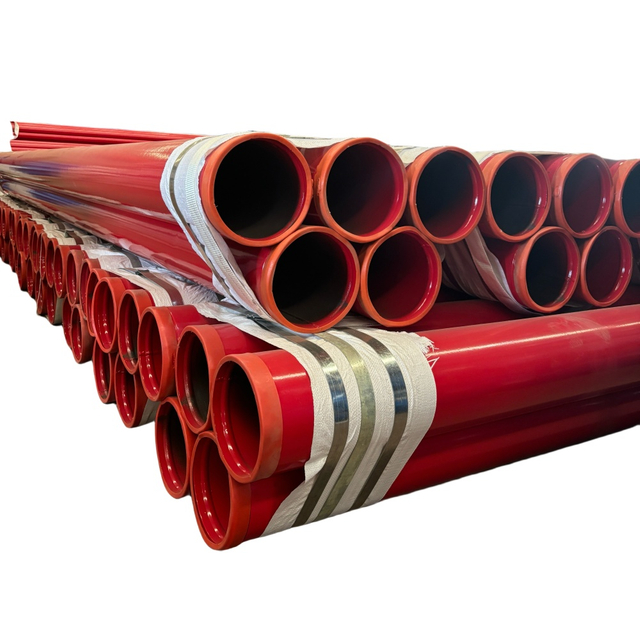
When it comes to fire sprinkler steel pipes, ensuring safety and reliability requires adherence to strict codes and standards. These standards govern everything from material specifications to testing methods, making them essential for fire protection systems.
Fire sprinkler steel pipes must meet specific codes to ensure they perform as expected during an emergency. Industry standards like ASTM, UL, and FM certification set the benchmark for manufacturing, material quality, and overall system integrity.
● ASTM Standards: These are essential for defining pipe material, wall thickness, and pressure ratings. ASTM A795 and ASTM A53/A135 are commonly referenced for fire sprinkler pipes.
● UL/FM Certification: Pipes used in fire suppression systems must often meet the rigorous standards set by Underwriters Laboratories (UL) and Factory Mutual (FM) to guarantee safety and performance.
● ISO 9001: This standard ensures consistent manufacturing quality and control, helping maintain reliability across different production batches.
To ensure fire sprinkler steel pipes perform under extreme conditions, they must undergo several critical tests:
● Hydrostatic Tests: Pipes are subjected to high water pressure (up to 8300 kPa) to ensure they can withstand fire-fighting pressures without failing.
● Flaw Detection: ERW pipes undergo automated testing to identify defects in the welds that could compromise the pipe’s strength.
● Coating Adhesion Tests: For coated pipes, adhesion tests check the durability of the coating, ensuring it can protect the pipe against corrosion over time.
Various standards are used to define the materials, testing, and performance of fire sprinkler pipes. These include:
Standard | Description | Key Requirements |
ASTM A795 | Fire sprinkler pipes standard | Specifies material composition, wall thickness, and hydrostatic testing. |
ASTM A53/A135 | ERW and seamless carbon steel pipe standard | Defines weld quality and mechanical properties for fluid systems. |
ASME B36.10 | Grooved connection dimensions standard | Provides groove dimensions for compatibility with fittings. |
GB/T 3091 | Chinese national standard for welded steel pipes | Aligns with international standards for domestic projects. |
Different regions may have specific compliance requirements for fire sprinkler steel pipes:
● CE Marking: For the European Union, CE marking indicates that the pipes meet safety and environmental protection standards.
● UL/FM Certification: Required in North America, this ensures the pipe meets fire safety standards.
Testing is a critical part of the pipe’s manufacturing process. Here are the main tests that fire sprinkler pipes undergo:
● Hydrostatic Test: Pipes are filled with water and pressurized to detect leaks. This test ensures the pipe can handle the extreme conditions found in a fire situation.
● Flaw Detection: Using automated technology, manufacturers inspect pipes for any weld defects that could cause system failure during an emergency.
● Coating Adhesion Test: Coated pipes are tested to ensure the protective layers stay intact, especially in corrosive environments.
Tip: When selecting fire sprinkler pipes, always check for certifications like UL/FM for North America or CE for Europe. These labels provide peace of mind that the pipes meet local safety standards.
Choosing the right connection method for fire sprinkler steel pipes is crucial for both installation and long-term maintenance. The connection method affects everything from how quickly the system can be installed to its ability to withstand pressure during an emergency. Here, we'll cover the most common methods used to connect fire sprinkler pipes: grooved, threaded, and welded connections.
Grooved connections are one of the most popular methods for fire sprinkler systems. They involve creating a groove on the end of the pipe, which is then paired with a coupling that uses a gasket to seal the connection.
Process and Benefits
The grooved connection process is fast and requires no welding or threading. The pipe ends are rolled to form grooves, and a gasket is placed inside the coupling. The coupling then clamps the pipe securely in place. This method provides a strong, leak-proof connection that can handle both high pressures and thermal expansion.
Ideal Applications
Grooved connections are ideal for tight spaces and retrofit projects where quick installation is crucial. They are commonly used in commercial buildings and industrial applications where speed and flexibility are necessary. The ease of disassembly for future maintenance or system modifications is another reason grooved connections are favored in many projects.
Threaded connections are a traditional and simple method for connecting pipes. This involves cutting threads into the pipe and fitting them into matching threaded fittings.
Pros and Cons
The main advantage of threaded connections is their cost-effectiveness, especially for small-diameter pipes. Threaded connections are also easy to install and require fewer specialized tools. However, they are more labor-intensive than grooved connections, and over time, the threads may wear out, potentially leading to leaks or damage.
Best for Small Diameters
Threaded connections are best used for smaller pipe sizes, typically from DN15 to DN50. These connections are commonly used in residential systems or for branch lines in larger systems where the flow of water is less demanding.
Welded connections provide the most durable and permanent bond. This method involves using welding techniques (such as MIG or TIG welding) to fuse two pipes together, creating a seamless, strong connection.
Strength and Durability
Welded connections are known for their strength and ability to handle high-pressure applications. They are commonly used in industrial settings and in systems where there is a constant need for high water pressure. The welded joint is also resistant to vibrations and thermal changes, making it ideal for demanding environments.
Ideal for High-Pressure Systems
Welded connections are ideal for systems requiring high durability and pressure resistance. These connections are often used in heavy-duty industrial applications, such as factories or large-scale buildings, where sprinkler systems need to withstand continuous use under pressure.
Connection Type | Ideal Pipe Size | Advantages | Disadvantages |
Grooved | DN65–DN200 | Fast installation, flexible, no welding | Not suitable for extremely high pressure |
Threaded | DN15–DN50 | Cost-effective, easy to install | Labor-intensive, prone to wear |
Welded | All sizes | Permanent, high-strength, pressure-resistant | Requires skilled labor, slow installation |

When choosing materials for fire sprinkler systems, it’s essential to compare steel pipes with non-steel alternatives like PVC-C pipes. While steel has been the standard for years, other materials like PVC-C are sometimes used in specific applications. Here, we’ll compare the performance of sprinkler steel pipes and PVC-C pipes in key areas such as pressure resistance, fire resistance, durability, and lifecycle costs.
Steel pipes, especially when coated, offer superior pressure resistance compared to PVC-C pipes. Sprinkler systems require pipes to withstand high water pressures, often ranging from 700 to 1200 psi. Steel pipes are designed to handle these pressures effectively, while PVC-C pipes are typically rated for lower pressures, usually up to 500 psi. This makes PVC-C pipes suitable for less demanding systems, but they are not ideal for high-pressure or heavy-duty applications.
Corrosion Resistance
Steel pipes can corrode over time, especially when uncoated. However, coated steel pipes (such as galvanized or epoxy-coated) provide enhanced corrosion resistance, extending their service life. PVC-C pipes, on the other hand, are immune to rust but can degrade under UV exposure or in environments with extreme temperatures. Overall, steel with coatings performs better in environments where corrosion is a concern.
Feature | Steel Pipe | PVC-C Pipe |
Pressure Resistance | 700–1200 psi | Up to 500 psi |
Corrosion Resistance | Requires coating for best performance | Corrosion-resistant, but UV-sensitive |
Durability | Excellent, especially with coatings | Moderate, vulnerable to UV and extreme temperatures |
One of the most critical factors in fire sprinkler systems is fire resistance. Steel pipes are fire-resistant and can handle extreme temperatures without deforming. This is essential when fire suppression is needed in high-heat environments. PVC-C pipes, however, are vulnerable to heat. They begin to deform at temperatures above 140°F (60°C), making them unsuitable for areas exposed to high heat, such as industrial settings or zones with potential fire hazards.
Lifecycle Costs
Steel pipes have a higher upfront cost compared to PVC-C pipes. However, due to their durability and resistance to high pressure and fire, they often provide a lower total cost of ownership. Steel pipes require less frequent replacement and maintenance, especially if they are coated. In contrast, while PVC-C pipes are cheaper initially, they may need to be replaced more often, particularly in high-demand or harsh environments. Additionally, PVC-C systems may require extra protective measures like UV shields or temperature control.
Feature | Steel Pipe | PVC-C Pipe |
Fire Resistance | Excellent, withstands high temperatures | Deforms at temperatures above 140°F |
Lifecycle Costs | Higher upfront cost, lower long-term maintenance | Lower upfront cost, higher replacement frequency |
By understanding these key differences, you can make an informed choice about which type of pipe best suits your fire sprinkler system’s needs. Steel pipes remain the top choice for most commercial and industrial applications, while PVC-C pipes might be suitable for smaller, less demanding systems.
Choosing the right fire sprinkler steel pipe is essential for ensuring your system performs reliably in an emergency. The selection process depends on several factors, such as the system's pressure needs, environmental conditions, and compliance with local codes. Here’s a simple framework to help you make the best choice for your project.
One of the most important considerations is the pressure requirements of your fire sprinkler system. If the system needs to handle high pressure, you’ll need to choose between seamless or ERW (Electric Resistance Welded) pipes.
● Seamless pipes are ideal for high-pressure applications. These pipes are stronger and can withstand pressures up to 1200 psi, making them perfect for industrial facilities or high-rise buildings.
● ERW pipes, on the other hand, are cost-effective and suitable for standard applications with lower pressure requirements. They’re commonly used in commercial and residential buildings, where pressures are generally lower.
The environment where your sprinkler system is installed plays a big role in pipe selection. If your system is in a corrosive or humid area, coatings become essential.
● Coated pipes (galvanized, epoxy-coated, or plastic-lined) provide extra protection against rust and corrosion. This is important in areas like swimming pools, coastal regions, or chemical facilities, where moisture and chemicals can damage uncoated steel pipes.
● Uncoated steel pipes are suitable for dry environments or where corrosion is not a significant concern. However, they will require regular maintenance if exposed to harsh conditions.
Your installation environment and local regulations will also influence your choice. Consider factors like available space for installation and compliance with safety codes.
● Installation space: If you’re working in tight spaces or need to install the system quickly, grooved pipes might be the best choice. They offer fast installation and are flexible for tight or complex spaces.
● Compliance: Be sure the pipes you select meet the necessary standards. For example, UL/FM certifications are required in North America, while CE marking is needed for European projects. These certifications ensure the pipes meet fire safety standards and are suitable for your region’s requirements.
Choosing the right fire sprinkler steel pipe is critical for ensuring effective fire protection. It's essential to match the pipe type with your system's pressure needs and the environmental conditions it will face. Prioritize safety and compliance with fire safety codes over cost when selecting the best pipe. For projects requiring high-quality, reliable fire sprinkler solutions, Maitolead offers top-notch products that meet industry standards and provide long-term value. Their commitment to safety and durability makes them a trusted partner in fire protection systems.
A: A fire steel pipe is a specialized pipe designed for fire sprinkler systems, made to handle high pressure and extreme temperatures during a fire emergency. It ensures reliable water or suppressant agent flow to sprinkler heads.
A: Fire steel pipes are critical as they provide the necessary durability and pressure resistance for the effective operation of fire sprinkler systems, ensuring rapid activation during fires.
A: Consider system pressure, environmental risks (corrosion), and compliance with safety codes. Coated or seamless pipes are ideal for high-pressure and corrosive environments.