close
Choose Your Site
Global
Social Media
Views: 0 Author: Site Editor Publish Time: 2026-02-05 Origin: Site


Imagine the hidden arteries powering our modern world. From towering skyscrapers to vast oil networks, steel pipes hold everything together. They are the unsung heroes of global infrastructure. But picking the right pipe isn't always simple. A welded steel pipe starts as a flat plate or strip. It is then rolled and joined by a strong seam. In this post, we will explore the three main types: ERW, LSAW, and SSAW. You will learn how to choose the best option for your pressure needs and budget.
How do we group these pipes? It mainly comes down to how they are made. Manufacturers use different methods to shape the steel. They also use specific ways to weld the seam. Let's look at the three main types you will encounter in the industry.
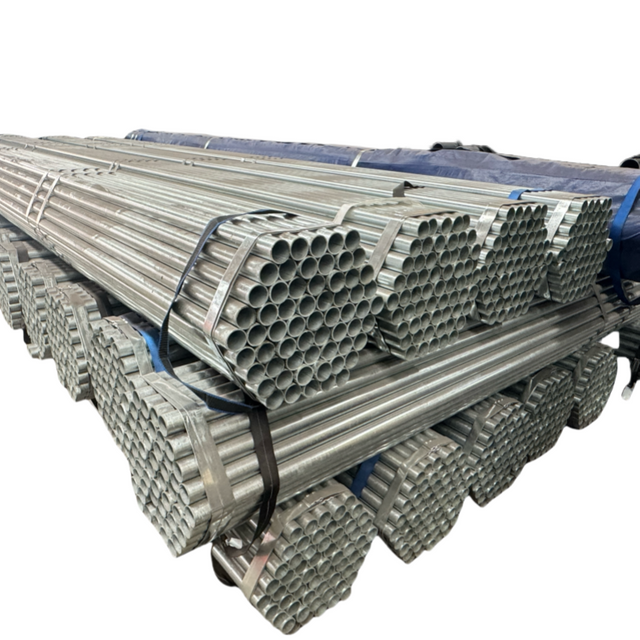
This is a very common type. Manufacturers start with a flat steel coil. They cold-form it into a round cylinder shape. Then, they send an electric current through the edges. This heat fuses the steel together. It happens without using any extra filler metal. The process is continuous and very fast.
Diameter: Usually small to medium (under 24 inches).
Primary Use: Low-pressure oil & gas lines, fencing, and scaffolding.
We like ERW pipes because they have accurate dimensions. They are also cost-effective. However, they do have a weakness. There is a risk of "grooving corrosion" right at the weld line. Also, they generally have thinner walls compared to other types.
Do you need something stronger? LSAW is the heavy-duty option. Factories make these from thick steel plates instead of coils. They use intense molding processes. You might hear terms like UOE or JCOE. These stand for the forming steps: U-ing, C-ing, O-ing, and Expanding.
The weld seam runs straight down the length of the pipe. It is extremely durable.
| Feature | Specification |
|---|---|
| Diameter Range | 406mm to 1422mm (approx. 16" – 56") |
| Pressure Rating | Very High (Suitable for API 5L) |
| Cost | High (Expensive materials and processing) |
We use LSAW for critical jobs. This includes high-pressure oil and gas pipelines. It is also common on offshore platforms. It handles stress better than any other welded pipe.
Imagine the cardboard tube inside a roll of paper towels. That is how SSAW pipe is formed. Workers take hot-rolled strip steel and curl it into a spiral. It forms a helix shape. They weld it from both the inside and the outside.
This method is clever. It allows us to make huge diameters from narrow strips of steel. We can produce sizes over 100 inches easily.
Pros: Excellent cost-to-size ratio. Stress distributes well along the spiral.
Cons: The weld seam is much longer. This creates more area for potential defects.
You will often see these in water transmission systems. They are also a top choice for construction. We use them frequently for bridge and building foundation piling.
Choosing the right pipe can feel overwhelming. They might look similar on the outside. However, their internal structure varies greatly. We created this table to help you compare them side-by-side. It highlights the differences in materials, costs, and capabilities.
| Feature | ERW (Electric Resistance) | LSAW (Longitudinal Submerged) | SSAW (Spiral Submerged) |
|---|---|---|---|
| Raw Material | Steel Coil | Steel Plate | Steel Strip / Coil |
| Weld Orientation | Longitudinal (Straight) | Longitudinal (Straight) | Spiral (Helix) |
| Diameter Range | Small to Medium (<24") | Medium to Large (16"-56") | Large to Massive (up to 100"+) |
| Cost | Low | High | Low to Medium |
| Pressure Rating | Low / Medium | High / Very High | Low / Medium |
The right choice depends on your specific project needs. We usually look at three main factors: budget, pressure, and size. Here is a quick guide to help you decide.
For Budget: SSAW or ERWMoney is often the biggest constraint. If costs are tight, these two are your best options. They use continuous manufacturing processes. This makes them faster and cheaper to produce. We recommend them for standard fluid transport or structural fencing.
For High Pressure: LSAWSometimes, performance matters more than price. Do you need to transport oil or gas at high pressure? LSAW is the industry standard here. It uses thick steel plates. This gives it superior strength and reliability. We use it for critical offshore pipelines.
For Massive Size (Piling): SSAWAre you building a bridge or a skyscraper foundation? You likely need very wide pipes. SSAW is the clear winner for this. The spiral design allows us to create huge diameters easily. It provides excellent structural integrity for deep foundation piling.
You might wonder if a pipe with a seam is safe. This is the most common question in our industry. We need to compare these two categories carefully. They serve different purposes depending on the project requirements.
Historically, engineers viewed the weld seam as a flaw. They believed it was a natural weak point. It was the mostly likely place for a pipe to burst under pressure. People assumed a solid piece of metal was always superior.
However, the modern reality is quite different. Manufacturing technology has improved mainly through advanced heat treatment. We now produce welded pipes that are nearly as strong as seamless ones. They perform exceptionally well in most standard applications.
Seamless pipes still hold a specific place in the market. They are extruded from a solid round billet. This means they have no seam to fail. We recommend them for the most extreme environments.
Ultra-High Pressure: They handle intense stress without cracking.
High Temperatures: Ideal for boiler tubes or steam lines.
Critical Safety: Use them where zero risk of seam corrosion is acceptable.
Welded pipes are the workhorses of modern infrastructure. They offer advantages that seamless pipes simply cannot match. Here is why we often choose them for large projects.
Large Diameter Needs: Seamless pipes are limited by the size of the original steel billet. Welded pipes do not have this restriction. We can make them as wide as necessary.
Cost Efficiency: Manufacturing seamless pipe is complex and expensive. Welded options are significantly cheaper for long pipelines.
Structural Piling: Foundations require specific wall thicknesses. Welded pipes allow us to customize dimensions easily for bridges and skyscrapers.
Safety is our top priority when manufacturing steel pipes. We cannot afford mistakes when transporting oil, gas, or supporting a building. Therefore, every single pipe goes through rigorous testing before it leaves the factory. Here is how we ensure they are ready for the real world.
This is the most direct way to test strength. We seal the pipe ends and fill the body with water. Then, we pump up the pressure higher than its rated operating limit. We hold it there for a specific time.
If there is a leak, water will spray out. If the steel is weak, it might deform. This test guarantees the pipe can handle the internal pressure of your project.
We need to see inside the weld without cutting the pipe open. We call this Non-Destructive Testing. It allows us to find hidden defects that the naked eye misses.
Ultrasonic Testing (UT): We send high-frequency sound waves through the metal. If there is a crack or air bubble inside the seam, the sound bounces back. It works just like a medical ultrasound.
X-Ray / Radiographic Testing: We use radiation to take a picture of the weld's internal structure. This reveals incomplete fusion or slag inclusions. It gives us a permanent record of the weld quality.
Finally, we look closely at the exterior. As mentioned earlier, impurities around the seam can leave the pipe exposed to corrosion. We inspect the surface to ensure it is smooth and clean.
Inspectors check for scratches, gouges, or uneven beads. We remove any surface defects that could become a starting point for rust. This step is crucial for the long-term durability of the system.
Navigating pipe specifications can feel like learning a new language. We see many different codes on technical drawings. However, a few key standards dominate the market. Knowing them helps you order exactly what you need.
If you work in energy, you know this one. It is the gold standard for line pipes. We use it mainly for conveying gas, water, and oil. It specifies requirements for both seamless and welded steel pipes. You can trust it for high-pressure transmission systems.
This is likely the most versatile standard we encounter. It covers black and hot-dipped galvanized steel pipe. It applies to both seamless and welded forms. We often use it for mechanical applications and low-pressure fluid systems. It is reliable for air, steam, and water lines.
Are you working on a deep foundation? You will see this specification on the blueprints. It is the standard for welded and seamless steel pipe piles. It ensures the steel cylinder acts as a permanent load-carrying member. We rely on it for structural stability in construction projects.
China is a massive producer of welded pipes. Therefore, we often see their national standards in global supply chains. They are rigorous and specific.
GB/T 3091: This is for low-pressure liquid delivery. We use it for water, gas, and air heating.
GB/T 9711: This mirrors the API 5L standard. It is designed specifically for the oil and natural gas industries.
Here is a simple chart to help you compare them. It groups them by their primary function.
| Standard | Industry Focus | Key Application |
|---|---|---|
| API 5L | Energy / Petroleum | High-pressure oil and gas transmission lines. |
| ASTM A53 | Mechanical / General | Structural supports and low-pressure fluid transport. |
| ASTM A252 | Construction | Steel pipe piles for building foundations. |
| GB/T 9711 | Energy (China) | Equivalent to API 5L for oil and gas. |
We have covered the three main players in the piping world. Remember that ERW pipes are perfect for general utility and low-pressure needs. If you face extreme pressure, LSAW is your strongest ally. Finally, for massive foundations and pilings, SSAW offers the best size options.
There is no single perfect pipe for every situation. The strongest option is not always the right choice for your budget. The true winner is the pipe that fits your specific engineering demands.
Do not leave your next big project to chance. Consult with our engineers to select the specific grade and type of welded pipe for your next project.