close
Choose Your Site
Global
Social Media
Views: 0 Author: Site Editor Publish Time: 2026-02-04 Origin: Site


Most industrial piping systems are designed to keep fluids moving constantly and efficiently. However, there are critical times when that flow must be stopped immediately to ensure safety. This is where a specific component called a blind flange becomes absolutely essential.
A blind flange is a solid disk used to securely block a section of pipe. Unlike standard flanges, it has no center opening, creating a strong barrier against high pressure. It acts as a heavy-duty seal that allows workers to isolate parts of the system.
But this device is much more than just a simple lid for a pipe. In this post, you will learn how blind flanges ensure safety during maintenance and testing. We will also explore the different types available and how to choose the right one.
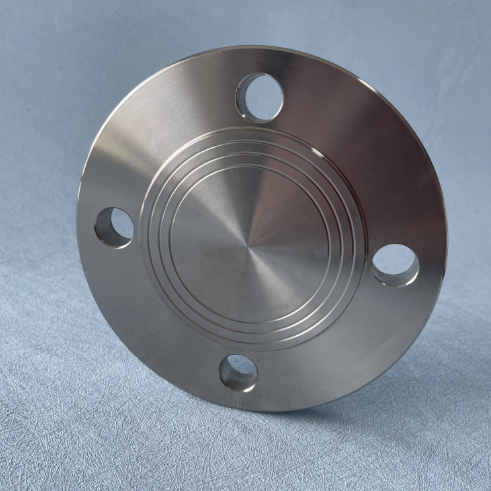
You can think of a blind flange as a solid wall for your piping system. It looks like a standard flange, but it has one major difference. It does not have a center bore or opening to let fluids pass through.
Instead, it is a solid metal disk with bolt holes drilled around the perimeter. We often refer to this component as a solid flange or a blank flange. Its simple design makes it incredibly effective at stopping flow completely.
The name might sound strange at first, but it makes perfect sense. This device literally "blinds" the pipe. It blocks the line of sight and prevents liquid or gas from moving forward. Just like a blind pulled over a window blocks light, this flange blocks the internal path of the pipeline.
Installing them is a straightforward process. You bolt the blind flange directly to an open flanged end or a nozzle on a vessel. It does not connect two pipes together like other types.
To ensure a leak-proof seal, you place a gasket between the blind face and the mating flange. Once the bolts are tightened, they compress the gasket to create a secure barrier.
These flanges actually work harder than most other piping components. While a standard flange lets pressure pass through, a blind flange must fight against it. The internal pressure pushes directly against the center of the plate.
This force creates significant bending stress at the center. To handle this load, they are typically manufactured to be much thicker than a matching weld-neck flange. This extra blind flange thickness ensures they do not bow or fail under high pressure.
Here is a quick comparison to help you spot the difference:
| Feature | Standard Flange (e.g., Weld Neck) | Blind Flange |
|---|---|---|
| Center Opening | Yes (Bore matches pipe) | No (Solid Steel) |
| Primary Function | Connects pipes together | Blocks or terminates pipe |
| Stress Type | Hoop tension | Bending stress at center |
| Thickness | Standard wall thickness | Often thicker for reinforcement |
You might wonder why we need a flange that doesn't let anything through. It seems counterintuitive for a piping system. However, this simple component serves four critical roles in industrial operations.
Repairs often require us to shut down specific sections of a piping system. We cannot simply turn off a pump and hope for the best. Maintenance crews need a guarantee that dangerous fluids will not reach them.
Valves are useful, but they are not perfect. They can leak or pass fluid if the seal wears out. A blind flange provides a positive shut-off. It acts as a physical wall between the live system and the work area.
This solid barrier ensures safety during complex repairs. It prevents accidental flow much better than a standard valve ever could.
Before a new pipeline goes into service, we must test it for leaks. We typically do this by filling the line with water or air at high pressure. This process is known as hydrostatic or pneumatic testing.
You need a way to seal the ends of the pipe to build up this pressure. A blind flange acts as a heavy-duty bulkhead. It bolts onto the end of the line and holds the pressure inside.
Once the test is finished and the line passes inspection, workers can easily remove the flange. This makes them essential tools for hydrotesting flanges.
Sometimes, a pipe run ends because construction is finished for now. We need to close the line, but we might want to extend it later. You have two main choices here: a welded cap or a blind flange.
Welded Cap: It is permanent. If you want to expand the line later, you have to cut it off.
Blind Flange: It is bolted on. You can simply unbolt it and add new pipe segments anytime.
Using a blind flange gives you flexibility. It effectively terminates the line today but leaves your options open for tomorrow.
Pipes and tanks do not stay clean forever. Sludge, sand, and debris can build up inside over time. We need a way to get inside to clean them out.
Engineers often install blind flanges on vessels to act as "manways" or access covers. When cleaning is necessary, maintenance teams unbolt the flange. This opens up a large hole for inspection.
They can then insert hoses, cleaning tools, or "pigs" to scrub the line. This function turns the flange into a convenient cleanout cover or rodding access point.
Standard blind flanges are solid disks, but they are not the only option available. Engineers often modify these components to add functionality to a piping system. Let's look at two popular variations you will likely encounter in the field.
Sometimes, simply blocking a pipe is not enough. We might need to monitor what is happening inside the line right at the termination point. In these cases, we do not use a completely solid plate.
Instead, manufacturers drill a hole in the center and add threads. This creates a tapped blind flange. It allows you to screw in a threaded pipe or an instrument directly.
This modification is incredibly useful for several specific tasks:
Pressure Gauges: You can mount a gauge to monitor the pressure at the end of a header.
Drain Valves: It allows liquid to be drained from the end of a line without removing the heavy flange.
Thermowells: We can insert temperature sensors directly into the flow stream through the tapped hole.
Removing a heavy blind flange takes time and physical effort. If a pipeline needs to be opened and closed frequently, a standard flange is not efficient. This is where the spectacle blindcomes in.
It gets its name because it looks like a pair of glasses or the number eight. It combines a solid steel plate and an open spacer ring into a single metal piece.
To use it, you loosen the bolts and rotate the device. You can switch from "open" (flow) to "closed" (blind) in minutes. The bolts hold it in place, so you never have to lift the heavy plate completely away.
Here is how a spectacle blind vs. blind flange compares in operation:
| Feature | Standard Blind Flange | Spectacle Blind |
|---|---|---|
| Structure | Single solid disk | Two connected disks (One open, one solid) |
| Installation | Must be fully removed to open flow | Loosened and rotated (remains attached) |
| Best Use | Permanent or long-term isolation | Frequent maintenance cycles |
| Terminology | Blank flange | Line spade, Figure-8 |
Ending a pipeline requires the right tool for the job. Engineers have several options to close off a system. It helps to understand how blind flanges compare to other common methods.
The biggest difference here is between permanence and flexibility. Both components block the end of a pipe, but they do it differently.
A pipe cap is typically welded directly onto the pipe end. Once we weld it in place, it becomes a permanent part of the system. You cannot remove it easily. If you need to extend the line later, you must cut the pipe.
In contrast, a blind flange is secured with bolts. It creates a seal that is just as strong as a weld. However, you can unbolt it anytime. This makes it the perfect choice for lines that might need future expansion.
Pipe Cap: Best for permanent closures where no future access is needed.
Blind Flange: Best for temporary closures, cleanouts, or future connection points.
It can be confusing because these components often look identical from the side. They share the same material, thickness, and bolt hole patterns.
The structural difference is simple but vital. Standard types, like Slip-On or Weld Neck flanges, are designed to connect pipes. They have a large hole, or bore, in the center to let fluid pass through.
A blind flange has no bore at all. It is a solid wall of steel. Its only job is to stop the flow, not continue it.
Here is a quick breakdown of their differences:
| Feature | Blind Flange | Weld Neck / Slip-On Flange |
|---|---|---|
| Center Design | Solid (No opening) | Hollow (Bored to match pipe) |
| Primary Goal | Stop flow / Isolate | Join pipes / Continue flow |
| Downstream Access | Blocks access | Allows fluid to pass |
Engineers do not guess when picking a blind flange. We rely on strict standards to ensure the system holds pressure safely. You need to know the specific rules that govern these heavy components.
Two main codes dictate the dimensions and pressure ratings for the industry. The American Society of Mechanical Engineers (ASME) sets these global rules.
For most standard pipe flanges, we look at ASME B16.5. It covers size, tolerance, and marking. If you are dealing specifically with line blanks or spacers, you should refer to ASME B16.48. These documents ensure that a flange bought in Texas fits a pipe in Tokyo.
You must choose a material that matches the rest of your piping system. Mixing metals can lead to disaster. Common choices include:
Carbon Steel (A105): This is the workhorse for high-temperature and high-pressure industrial lines.
Stainless Steel (304/316): We use this for corrosive environments or sanitary applications like food processing.
Cast Iron: You will often see this in municipal water systems and fire protection.
Warning: Always match the blind material to the pipe. If you bolt stainless steel to carbon steel, it can cause galvanic corrosion. This reaction eats away at the metal and causes leaks.
The "face" is the surface area that sits against the gasket. The shape of this face changes how the seal works. You generally select the face type based on pressure requirements and material strength.
| Face Type | Description | Best Application |
|---|---|---|
| Raised Face (RF) | A small ring surrounds the bore to concentrate pressure. | Standard for most oil, gas, and chemical industries. |
| Flat Face (FF) | The sealing surface is completely flat and smooth. | Critical for brittle materials like cast iron or plastic to prevent cracking. |
| Ring Type Joint (RTJ) | Features a groove for a metal ring gasket. | Used in extreme high-pressure and high-temperature systems. |
Safety is not optional when working with high-pressure piping. A blind flange looks simple, but it carries significant risks. You must follow strict protocols to prevent serious injury during installation or removal.
The biggest danger you face is stored energy inside the pipe. You must never try to remove a blind flange without checking for pressure first. The line might look empty, but it could still hold gas or liquid.
If you loosen the bolts on a pressurized line, the flange can blow off. It effectively becomes a heavy, metal projectile. This is a major safety hazard that can cause fatal injuries.
We strongly recommend using bleed rings or tapped blinds. These devices allow you to vent pressure safely. They let you verify zero pressure before you touch a single bolt.
Large industrial blind flanges are incredibly heavy pieces of solid steel. You cannot simply lift them into place by hand. Trying to pry flanges apart manually often leads to crushed fingers.
We use specific tools called Jack Bolts or jackscrews to manage this weight. They thread through the flange to push the faces apart mechanically. This creates a safe gap for you to work.
Using jack bolts keeps your hands safe. It allows you to insert the blind or gasket without physical strain.
Your seal is only as good as the gasket placement. You cannot just drop the gasket in and tighten the bolts. It must sit perfectly centered on the flange face.
If the gasket is off-center, it creates a weak spot in the seal. High pressure will find this gap immediately. It can cause a dangerous blowout during hydrostatic testing.
Take your time to align it correctly. A few extra minutes here prevents a major failure later.
You will find blind flanges in almost every industrial sector. They are not limited to just one type of factory. Wherever fluids move through pipes, these components play a vital role. Let's look at who needs them the most.
Oil refineries handle some of the most dangerous fluids on Earth. They cannot afford leaks or accidents. Safety is the absolute top priority in these environments.
During scheduled maintenance, known as "turnarounds," crews use blind flanges extensively. They isolate sections of pipe containing volatile chemicals. This creates a trusted barrier against high pressure and toxic fumes.
It keeps workers safe while they repair downstream equipment. We rely on this solid steel wall to prevent disasters.
Municipal water systems use them everywhere. You will often see them on fire protection lines too. Leading manufacturers like APC Fire and Jianzhi supply these critical components for safety systems.
Engineers use them to close off hydrant lines or terminate sprinkler headers. They also install them at the end of main water lines. This smart planning allows for future expansion.
If a new building needs water later, we just unbolt the flange. It allows us to connect new pipes without cutting the main line.
Hygiene is the main concern in this industry. We often refer to them as sanitary blind flanges here. They seal off piping systems for milk, beer, or soda.
Operators remove them frequently to clean the lines. It allows easy access to scrub away bacteria or food residue. This ensures the final product remains safe for you to drink.
Dairy: Quick access to clean milk lines.
Brewing: Inspecting fermentation tanks.
Processing: flushing out food sludge.
Yes, this modification creates what is known as a "Tapped Blind." It is frequently done to allow the installation of instruments like pressure gauges, thermowells, or drain valves directly at the end of the line. However, this must be done carefully. The drilling must adhere to strict engineering standards to ensure the remaining metal thickness is still strong enough to handle the system's pressure rating.
Selecting the correct blind flange is determined strictly by the existing piping system. You must match two key specifications: the Nominal Pipe Size (NPS) and the Pressure Class (such as Class 150, 300, or 600). If you try to use a Class 150 blind on a Class 300 pipe, the bolt holes will not align, and the flange will not be strong enough to hold the pressure.
Blind flanges are typically manufactured to be thicker than matching weld-neck or slip-on flanges because of mechanical stress. While standard flanges allow fluid to flow through, a blind flange acts as a solid wall. The internal pressure pushes directly against the center of the plate, creating significant "bending stress." The extra metal thickness is required to prevent the flange from bowing or failing under this concentrated load.
We have covered a lot about this solid steel disk. While it might look simple, the blind flange plays a huge role in keeping industrial systems running smoothly. It is an essential tool for ensuring safety during maintenance, allowing for flexible future expansion, and making accurate pressure testing possible.
Remember, choosing the right blind flange is not just about finding a piece that fits. You must select the correct material and pressure rating to match your specific piping needs. Most importantly, safety protocols are non-negotiable. Always verify that pressure is released before removing any bolts.
Ready to find the perfect component for your project? We encourage you to consult our full catalog to view specific dimensions and ANSI/ASME tables to ensure you get exactly what you need.