close
Choose Your Site
Global
Social Media
Views: 0 Author: Site Editor Publish Time: 2026-02-06 Origin: Site


Every piping system, no matter how complex, eventually needs a "stop sign." Whether you need to block off a pipe for routine maintenance or seal an opening for future expansion, choosing the right termination point is critical for keeping the system safe and leak-free.
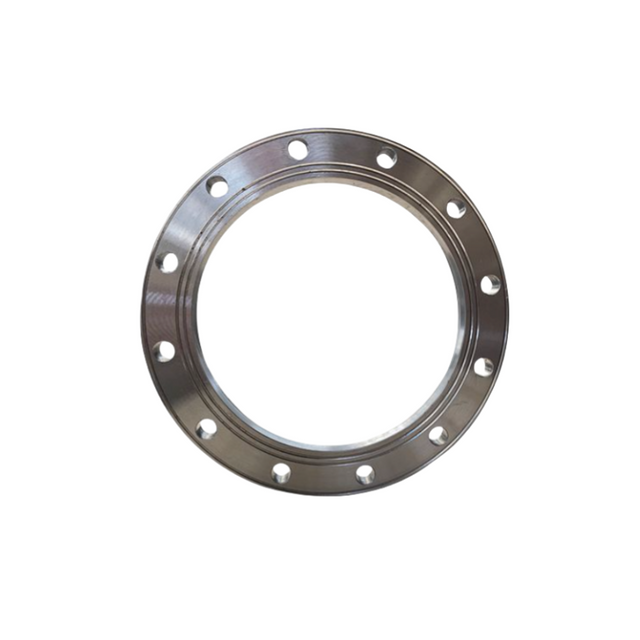
If you are wondering what the standard sizes of blind flanges are, the direct answer is that they typically range from 1/2 inch (DN 15) to 24 inches (DN 600) under the most common industrial standard, ASME B16.5. However, finding the correct size involves more than just measuring the pipe's diameter; it also depends on the specific industry you are working in, such as waterworks or fire protection, which may use different standards like Ductile Iron or Grooved systems.
In this post, you will learn the complete breakdown of dimensions for standard steel flanges and how pressure ratings impact their physical size. We will also explore the unique size standards for specific industries, helping you ensure you have the exact fit for your project requirements.
When we talk about "standard" blind flanges, we are almost always referring to two specific codes set by the American Society of Mechanical Engineers (ASME). These standards dictate exactly how wide, thick, and heavy a flange must be to ensure it fits safely onto your pipes.
For the vast majority of projects, ASME B16.5 is the rulebook. It is the most common standard used in the oil, gas, and chemical processing industries. If you are ordering a blind flange off the shelf, it is likely built to these specifications.
This standard covers a specific range:
Range: NPS 1/2 (smallest) through NPS 24 (largest).
Application: General industrial piping systems where standard pressure ratings are required.
It standardizes the bolt holes and face dimensions so a 4-inch flange from one manufacturer will fit perfectly with a 4-inch valve from another. We rely on this interchangeability to keep construction moving smoothly.
Sometimes, a project demands something massive. Once you exceed 24 inches, you leave B16.5 territory and enter ASME B16.47. This standard handles the "giants" of the piping world.
It covers sizes from NPS 26 through NPS 60. However, it gets a little tricky here. B16.47 divides these large flanges into two distinct categories, and they are not compatible with each other:
Series A: These are thicker, heavier, and stronger. They typically match the older MSS SP-44 standard. You use them when external loads or stress are high.
Series B: These are lighter and more compact. They typically align with API 605 standards. We often choose them for non-critical applications where saving weight (and cost) is a priority.
Warning: You cannot bolt a Series A blind flange to a Series B flange. Their bolt hole patterns are different.
In the global market, we often see drawings that mix units. The US typically uses NPS (Nominal Pipe Size in inches), while Europe and parts of Asia use DN (Diameter Nominal in millimeters).
It helps to have a cheat sheet. Here is a quick reference table to help you convert between the most common standard sizes:
| NPS (Inches) | DN (Millimeters) | Common Application |
|---|---|---|
| 1/2" | DN 15 | Instrument connections / Drains |
| 1" | DN 25 | Small bore piping |
| 2" | DN 50 | Process lines |
| 4" | DN 100 | Main distribution lines |
| 8" | DN 200 | Industrial headers |
| 12" | DN 300 | Large supply mains |
| 24" | DN 600 | Limit of ASME B16.5 |
When we order a "4-inch" blind flange, we are referring to the pipe size it connects to, not the actual width of the metal disk. This distinction often confuses people. A 4-inch flange is not just 4 inches wide.
The physical size of the flange changes dramatically based on how much pressure it needs to hold. As pressure ratings rise, the flange must get stronger. It gets thicker. The Outside Diameter (OD) expands. We need much more solid steel to contain high-pressure fluids than we do for low-pressure water.
Therefore, a 4-inch flange for a high-pressure line might look completely different from a 4-inch flange for a low-pressure drain. They fit the same pipe size, but they are not the same size physically.
The ASME B16.5 standard groups these pressure capabilities into specific "Classes." You might hear engineers call them "pounds" or see the symbol "#" on the spec sheet. The standard classes are:
Class 150
Class 300
Class 400
Class 600
Class 900
Class 1500
Class 2500
Let's look at a real-world example to see how much these dimensions can grow. Consider a large 24-inch blind flange.
In Class 150: The Outside Diameter (OD) is approximately 32 inches. It is big, but manageable.
In Higher Classes: If you upgrade to Class 600 or Class 2500, that OD grows significantly larger. The flange becomes massive and extremely heavy.
It is not just the outer width. The bolt configuration changes too. To keep the seal tight under extreme pressure, we need bigger, stronger bolts. Consequently, the diameter of the bolt holes increases. The "Bolt Circle"—the invisible ring where these holes sit—moves outward. This prevents you from accidentally bolting a weak Class 150 flange onto a dangerous high-pressure Class 600 pipe; the holes simply won't line up.
When we select a blind flange, we cannot just look at the diameter. We must also look at the "Face." This is the surface area where the gasket sits. It determines how the flange seals against the pipe. If you pick the wrong face type, you risk leaks or even damaging your equipment.
This is the workhorse of the industry. You will see Raised Face flanges on almost every standard steel piping system. They feature a small "lip" around the bore. This concentrates the pressure on a smaller gasket area.
We use them because they provide an excellent seal for most oil and gas applications. They are easy to install and easy to replace.
Sometimes, we need to connect to equipment made of brittle materials, like cast iron valves or bronze fittings. If we used a Raised Face flange here, the concentrated pressure might crack the cast iron. It creates a bending moment the material cannot handle.
In these cases, we use a Flat Face flange. It has no raised lip. The contact surface is completely flat. This allows the bolt force to spread evenly across the entire face, protecting the fragile mating part from damage.
When things get extreme—think very high pressure or scorching temperatures—standard gaskets might fail. Here, we turn to the Ring Type Joint.
These flanges have a deep groove cut into their face. We place a solid metal ring (usually soft iron or steel) into this groove. When we tighten the bolts, the metal ring crushes into the groove, creating a metal-to-metal seal. It is incredibly robust.
In modern engineering, especially where weight is a problem, we use advanced Compact Flanges. These designs are fascinating because they change how we think about sealing.
Unlike standard flanges, these use a special mechanism called the IX Seal Ring. In a normal flange, internal pressure tries to push the seal open. In a Compact Flange, the opposite happens.
The Mechanism: The IX seal ring uses elastic energy. If any fluid tries to leak past the inner "heel," the internal pressure actually pushes against the seal ring.
The Result: The pressure intensifies the sealing action. The higher the pressure, the tighter it holds.
We see these frequently in subsea operations and nuclear applications. In these environments, saving weight is critical. Compact flanges offer high performance without the massive bulk of standard high-pressure flanges.
| Face Type | Best Used For | Key Feature |
|---|---|---|
| Raised Face (RF) | Standard Steel Piping | Concentrates pressure on the gasket. |
| Flat Face (FF) | Cast Iron / Brittle Equipment | Prevents cracking of mating parts. |
| RTJ | High Pressure & Temp | Uses a metal ring for a heavy-duty seal. |
| Compact (IX Seal) | Subsea & Nuclear | Internal pressure strengthens the seal. |
Not every pipe uses a heavy, bolted steel plate to stop flow. Depending on the industry, we might use completely different standards. If you work in fire protection or municipal water, the "standard sizes" differ from the oil and gas world.
In fire sprinkler systems and HVAC lines, we often skip the heavy bolting. Instead, we use Grooved End Caps. People frequently confuse these with standard flanges, but they work differently. We sometimes call them "Blind Disks" or simply caps.
They secure directly into a grooved coupling. It makes installation much faster.
Standard Sizes: These typically range from 1" (DN 25) up to 12" (DN 300).
Performance: They must be reliable. Manufacturers subject them to rigorous vibration tests to ensure they hold tight during seismic activity or pump surges.
Testing: Before they reach your job site, we often test them for sealing integrity. This usually starts at 0.3 MPa and ramps up to the full rated working pressure to guarantee no leaks occur.
Municipal water systems operate on a different scale. Here, we follow the AWWA C110 standard. These systems prioritize volume over extreme pressure.
We use Ductile Iron for these flanges rather than forged carbon steel. Because water mains are massive, the sizes go much higher. It is common to see these blind flanges in sizes up to 48 inches or even larger.
The Key Difference:
You cannot swap these with ASME flanges. They have different pressure ratings. While an industrial steel flange might be Class 150 or 300, AWWA flanges typically settle at Class 125 or Class 250. They handle the water pressure perfectly without the unnecessary weight and cost of high-pressure steel.
| System Type | Common Standard | Typical Size Range | Primary Material |
|---|---|---|---|
| Industrial / Oil & Gas | ASME B16.5 | 1/2" - 24" | Carbon / Stainless Steel |
| Fire / HVAC | Grooved Standards | 1" - 12" | Ductile Iron (Cap) |
| Municipal Water | AWWA C110 | 3" - 48"+ | Ductile Iron (Flange) |
Choosing the right size is only half the battle. You must also pick the right material. If you put a plumbing-grade iron cap on a high-pressure oil line, it will fail. We need to match the metal to the job.
For most industrial sites, Carbon Steel is the standard. It is the tough, reliable choice we use for high temperatures and high pressures. If you walk through an oil refinery, you will see ASTM A105 flanges everywhere.
It handles stress incredibly well. However, it can rust. We often paint it or coat it to keep it safe from the weather.
When the fluid inside the pipe is aggressive—like acid or saltwater—Carbon Steel won't last. It corrodes. Here, we switch to Stainless Steel.
Grades like SS304 and SS316 contain chromium and nickel. They fight off rust. We use SS316 specifically in marine environments because it has extra resistance to salt.
Not every pipe carries high-pressure steam. For water pipes, fire sprinklers, and gas lines in buildings, forged steel is overkill. It is too heavy and too expensive. Instead, we use Malleable Iron or Ductile Iron.
In these systems, we often don't use a bolted "blind flange." We use a threaded Plug or Cap. Reference catalogs from manufacturers like Jianzhi show these fittings are perfect for smaller sizes, typically ranging from 1/2" to 6".
They are excellent for:
Low-pressure plumbing.
Fire protection systems.
Commercial construction.
| Material | Best For | Common "Blind" Type |
|---|---|---|
| Carbon Steel | High Pressure / High Temp | Bolted Blind Flange |
| Stainless Steel | Corrosive Chemicals / Food | Bolted Blind Flange |
| Malleable Iron | Plumbing / Fire Sprinklers | Threaded Cap / Plug |
Installing a blind flange seems simple. We bolt it on, and we walk away. However, mistakes here can be deadly. We must follow specific rules to ensure the seal holds under pressure.
We see this mistake often. A technician might think a larger gasket is better. They install a "solid" gasket that covers the entire face of the flange. Do not do this.
Using a solid gasket is dangerous. It prevents the outer edge of the flange—the "heel"—from touching the mating flange. We need this metal-to-metal contact. It stabilizes the connection. If we put a gasket in the way, the flange can flex or "rotate" when we tighten the bolts. This movement breaks the seal.
The Heel Contact Theory
Engineering standards rely on this heel contact. Theoretically, the outer rim must stay in firm contact up to 1.8 times the flange's pressure rating at room temperature. If we lose this contact, we lose our safety margin.
Sometimes, a standard blind flange is not the best tool for the job. If we need to open and close a pipe section frequently, unbolting a heavy steel plate every time is inefficient.
Spectacle Blinds / Line Blinds: These look like a pair of glasses (or a figure-8). One side is a solid steel plate; the other is an open ring. We keep them installed permanently on the line. When we need to stop flow, we simply loosen the bolts and rotate the "blind" side into place. It is faster and safer for regular maintenance.
Corrosion Prevention
Rust eats away at safety. We must protect the bolts and the seal ring. Advanced designs, like the Compact Flange with an IX Seal Ring, tackle this problem cleverly.
They rely on a tight outer "dust rim." This rim creates a barrier. It stops oxygen and corrosive agents from entering the gap around the bolts. If oxygen cannot get in, the bolts cannot rust. This protection depends entirely on maintaining that critical heel contact we mentioned earlier.
We know navigating pipe standards can be tricky. Here are the most common questions we hear from site managers and buyers when selecting blind flanges.
A: It comes down to how they attach.
A Blind Flange is a solid plate. You bolt it to another flange. It is heavy, robust, and designed for easy removal when you need access for maintenance.
A Cap is a fitting. It attaches directly to the pipe end. Depending on the system, you might:
Weld it (Butt weld caps).
Screw it on (Threaded caps, common in plumbing).
Clamp it (Grooved caps, common in fire protection).
Caps are generally lighter and often intended as a more permanent closure.
A: No. You should avoid this setup.
If you bolt a Flat Face flange against a Raised Face nozzle, a gap remains around the outer edge. When you tighten the bolts to seal the joint, you force the flange to bend into this gap.
If the Flat Face flange is made of brittle material—like Cast Iron—it will not bend. It will snap. This is a major cause of flange failure. Always match the face types: Flat to Flat, Raised to Raised.
A: The "Bolt Circle" is the invisible ring connecting the center of every bolt hole. It is the most critical measurement for ensuring fit.
Measuring from "center to center" across an empty hole is hard. Here is a practical trick we use in the field:
Pick a bolt hole.
Measure from the left edge of that hole.
Pull your tape measure across the center of the flange to the hole directly opposite.
Measure to the left edge of that opposite hole.
This distance is mathematically identical to the center-to-center measurement. It gives you an accurate bolt circle diameter every time.
Finding the correct blind flange size depends entirely on your specific industry standards. For oil and gas piping, you should rely on ASME B16.5 for the best fit. If you manage municipal water lines, look towards AWWA standards for large-diameter iron flanges. Remember that fire protection systems often use simple grooved caps instead of heavy bolts.
Never guess when ordering critical pipe components for your project. Always verify your dimensions against the official ASME, ANSI, or AWWA standard tables. This simple step ensures safety and prevents costly mistakes during installation.